
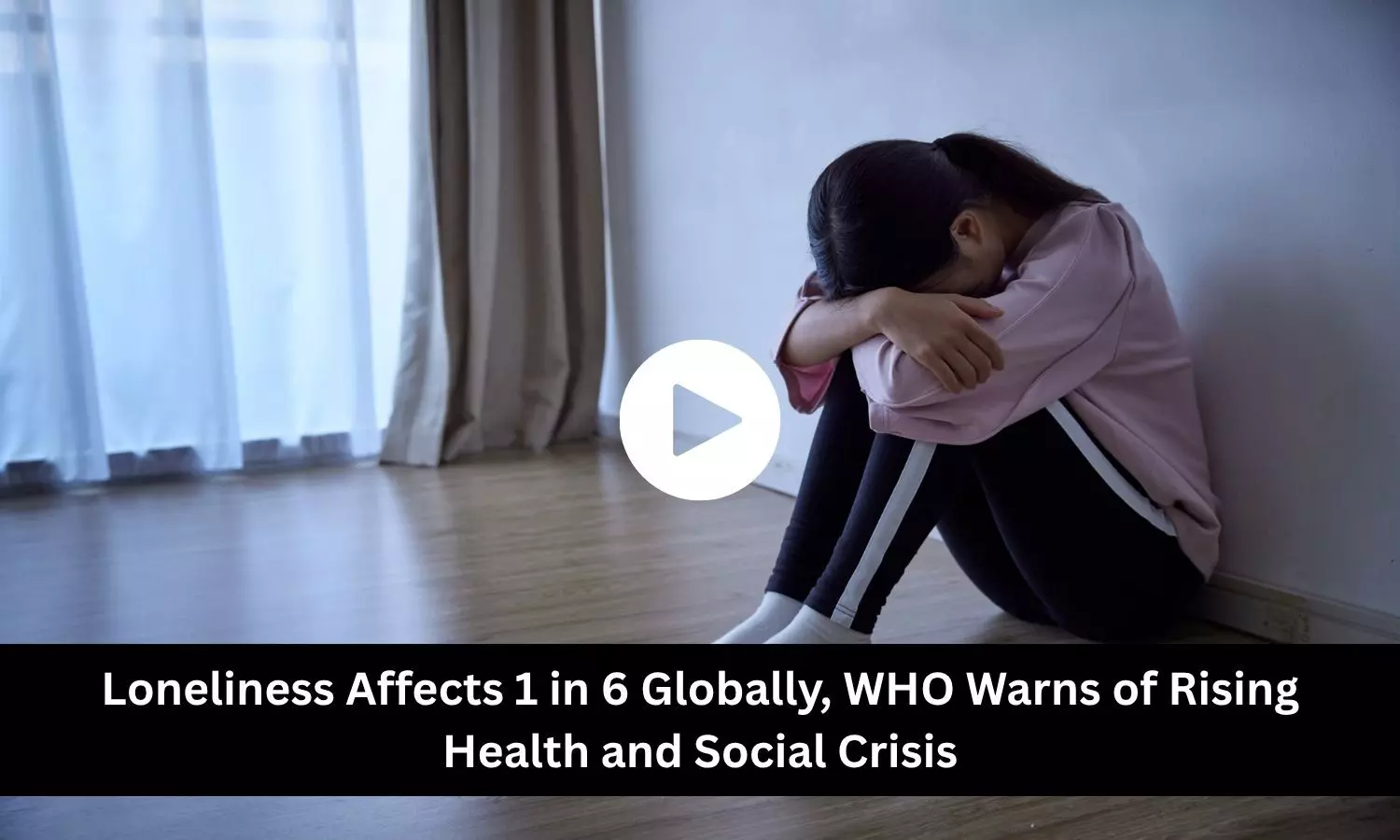
The World Health Organization (WHO) Commission on Social Connection has released its global report, revealing that 1 in 6 people worldwide is affected by loneliness, with significant impacts on health and well-being. Loneliness is linked to an estimated 100 deaths every hour, more than 871,000 deaths annually. Strong social connections can lead to better health and longer life, the report says.
WHO defines social connection as the ways people relate to and interact with others. Loneliness is described as the painful feeling that arises from a gap between desired and actual social connections, while social isolation refers to the objective lack of sufficient social connections.
“In this age when the possibilities to connect are endless, more and more people are finding themselves isolated and lonely," said Dr Tedros Adhanom Ghebreyesus, WHO Director-General. "Apart from the toll it takes on individuals, families and communities, left unaddressed, loneliness and social isolation will continue to cost society billions in terms of health care, education, and employment. I welcome the Commission's report, which shines a light on the scale and impact of loneliness and isolation, and outlines key areas in which we can help people to reconnect in ways that matter most.”
The report noted that the highest rate of loneliness was reported among adolescents and young adults (20.9 per cent among 13-17-year-olds and 17.4 per cent among 18-29-year-olds). The feeling of being lonely was also more common in low-income countries, where nearly one in four people (24 per cent) report feeling lonely.
The highest rates are found in the WHO African Region (24 per cent) -- twice the rate in high-income countries (about 11 per cent).
While data on social isolation is more limited, it is estimated to affect up to 1 in 3 older adults and 1 in 4 adolescents, the report said.
According to the report, poor health, low income and education, living alone, inadequate community infrastructure and public policies, and digital technologies are the major reasons for loneliness.
The report underscores the need for vigilance around the effects of excessive screen time or negative online interactions on the mental health and well-being of young people.
Reference: https://www.who.int/news/item/30-06-2025-social-connection-linked-to-improved-heath-and-reduced-risk-of-early-death


